The Role of Breath in Your Fitness Journey
6/18/20264 min read


The Role of Breath in Your Fitness Journey
Why better breathing may be the missing link behind your posture, core strength, and pain-free movement.
Before I began training in 2018, I was a shipper receiver at a local Meijer grocery store warehouse. Post-shift, I'd come home with my lower back aching and hyperextended, my chest collapsed down. So naturally, after entering the industry, I bumped against a truth many of us are quickly finding out: Your posture is almost always influenced (in part) by your muscular imbalances.
But something was missing. Though I had helped the uprightness of my back with rows and deadlifts, helped my shoulder blades sit properly with the TRX, and improved my walking posture with kettlebell swings—helping numerous clients do the same—there was one crucial piece: my ribs had collapsed inward like I just spent some time under a steamroller. I mean, you’ve heard of barrel chests, right? Think of the opposite—I was spoon-chested! My shoulder blades had spread out like a kite, and from the side, it still looked like I was slouching. Why? I was doing all the right exercises, activating all the right muscles; why didn’t we achieve the posture of Zeus?
It turns out that focusing only on the muscles you see in the mirror is a self-defeating strategy. Let me lay it all out straight:
I later discovered that the vital missing piece in my fitness journey was proper breathing.
The Diaphragm: A Posture Muscle
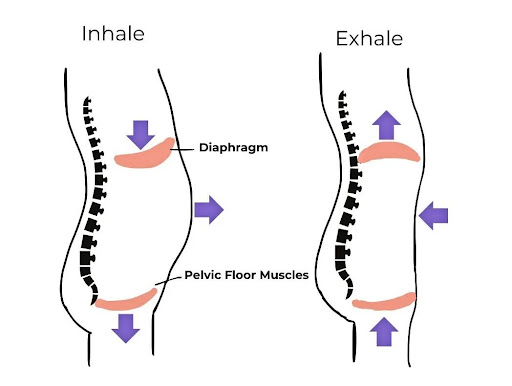
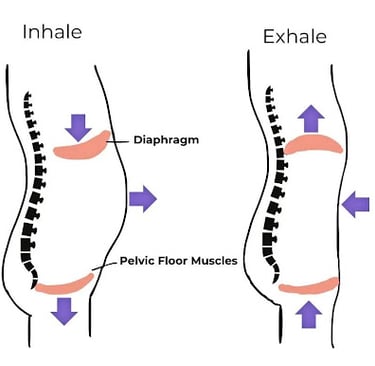
The diaphragm is not simply a respiratory muscle; it's fundamentally a posture muscle. It collaborates with the ribs, spine, pelvis, abs, obliques, back muscles, and pelvic floor to create a pressurized torso canister. Imagine your torso as a soda can: effective breathing pressure restores this structure. Good breathing mechanics expand the ribs, stack them over the pelvis, support the spine, and lessen the burden on the low back. Conversely, poor mechanics result in collapsed ribs, a caved chest, spread shoulder blades, an overextended low back, and compensatory patterns in the neck, jaw, and hip flexors.
When it’s doing its job, it:
Drops down on the inhale and pressurizes the whole canister (front, sides, and back of your torso).
Lets your ribs expand like an umbrella, not just flare up in the front.
Stacks your ribs over your pelvis so your low back can finally stop doing overtime.
When it’s not doing its job, you get exactly what I had:
Ribs collapsed inward
Chest caved
Shoulder blades sliding out like a kite
Low back trying to be the hero and getting smoked daily
You can row, deadlift, and swing all day, but if the diaphragm and ribcage aren’t moving, you’re basically building muscle on a crooked frame. Guess what? It gets even deeper than that.
Get this: The diaphragm affects everything. It is not just a slab of meat sitting below your lungs as an automatic “lung pump.” When your diaphragm moves healthily:
Your tongue should move forward
Your shoulders should rise and fall
Your spine should extend and release tension
Your ribs should expand
If you just took a couple of deep breaths while reading these four and none of these happened for you, I’ve provided a “factory reset” button in section 5 you can try out for yourself. First, let’s talk about how we almost got it right in the mainstream fitness world:
360° Breathing: The Key to Stability
To achieve a fit physique, healthy breathing must expand all around—front, sides, back, and lower ribs at the belt line. Deep breaths should cause your ribs to expand, drop, and align over the pelvis. A self-check: If your breath remains trapped in the upper chest, the neck may tighten as the low back arches awkwardly. These signs hint that you might not be engaging in full 360° breathing.
Bracing vs. Breath
While bracing is useful in lifting heavy loads, excessive reliance on it can lead to a mistaken belief that tightness equals support. In contrast, 360° breathing generates directed pressure for stability. Below is a table contrasting bracing and 360° breath mechanics:
Bracing 360° Breath Tight abs Full-torso pressure Forward pressure Front/side/back expansion Rib flare Rib stacking Neck/low-back tension Calm focus Fight-or-flight Less compression Stiffness Daily use
Breath Cadence for Performance
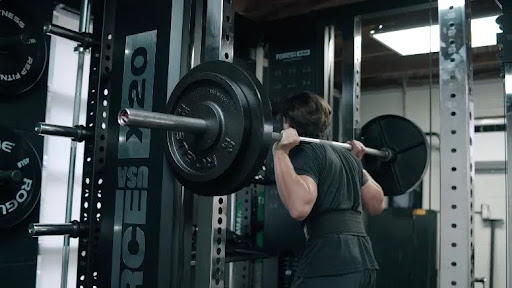
Understanding breath cadence is essential for better performance. Inhale acts as a gas pedal, prepping the body for action, while exhale functions as a brake pedal, promoting recovery. For exercises like squats, deadlifts, and rows, practice inhaling through your nose for 2–3 seconds, targeting your back ribs and belt line. Follow this by exhaling through your mouth for 3–4 seconds, as if fogging a window, ensuring rib structure remains correct.
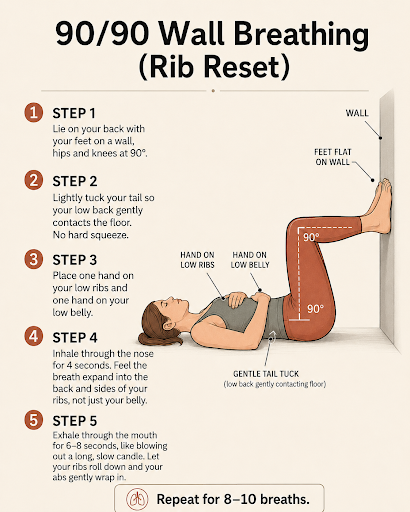
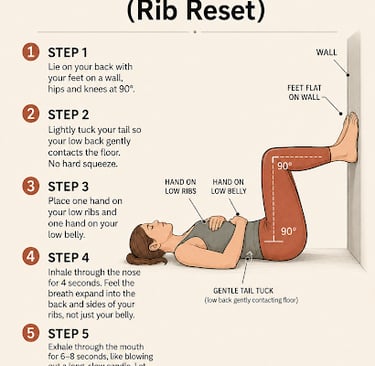
90/90 Rib Breathing
Practice this breathing method: Lie on your back with your feet against a wall, legs bent at 90 degrees. Gently tuck your tailbone, placing your hands on your low ribs and abdomen. Inhale through the nose for 4 seconds, then exhale through the mouth for 6–8 seconds. Repeat for 8–10 breaths. Pay attention; if your neck tenses or your low back arches, adjust your breath length. After standing, you should notice improved ease of movement.
At Lioncore, We Train Breath into Strength
Breath is not just a vital function; it’s the foundation for effective movement and strength training. When you incorporate proper breathing techniques, strength grows naturally, enabling you to enjoy pain-free mobility and fitness at your best.
My Fit Fundamentals: The lower back reset program available here will walk you through a step-by-step process to help ease back pain and discomfort. You could see tremendous relief in back pain and discomfort in as little as 4 weeks. Click 'Reset', and it, as well as free access to the LIONCORE app, is yours.